abs workout
The Ultimate Abs Workout: Science-Backed Routine for a Strong, Defined Core
SEO Quick Summary
Primary Keyword: Abs workout
Secondary Keywords: Core exercises, six-pack workout, lower abs workout, core strength routine, visible abs
Meta Description: Discover the ultimate abs workout routine designed to build real core strength, carve definition, and improve overall stability with science-backed exercises.
Getting defined, strong abdominals isn’t just about cranking out hundreds of sit-ups every morning. In fact, standard sit-ups often target the hip flexors more than the actual core muscles.
To build a truly functional, sculpted core, you need a balanced routine that targets every section of the abdominal wall—the rectus abdominis, obliques, and the deep-seated transverse abdominis.

Whether your goal is a visible six-pack or building the core stability required for heavy lifting and injury prevention, this guide covers the anatomy, the ideal workout routine, nutrition essentials, and common training mistakes.
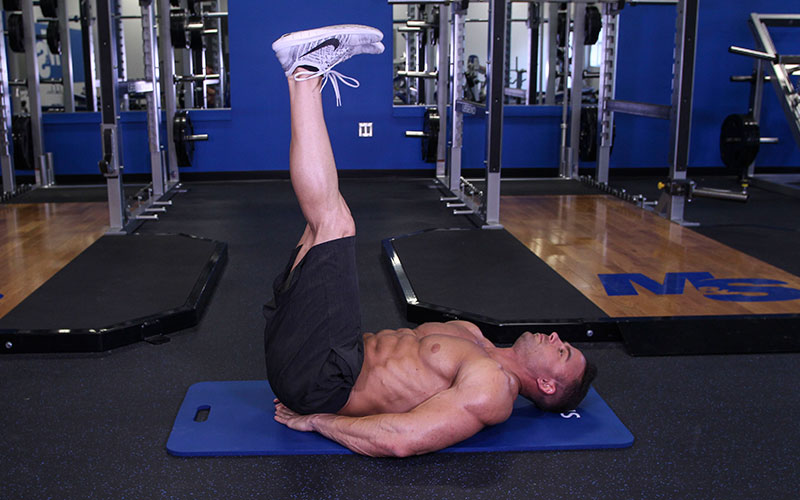
Understanding Core Anatomy: How Your Abs Actually Work
Before jumping into the routine, it helps to understand what you are training. Your “abs” are not a single flat sheet of muscle; they consist of distinct regions that perform specific movements:
-
Rectus Abdominis (The “Six-Pack”): Runs vertically down the front of your abdomen. Its main function is flexing the spine (pulling your ribcage toward your pelvis).
-
External & Internal Obliques: Located along the sides of your torso. They handle trunk rotation, side bending, and diagonal stabilization.
-
Transverse Abdominis (TVA): The deepest abdominal layer. Acting like a natural weight belt, it stabilizes the spine and pulls the belly button inward toward the spine.
-
Lower Abs: While technically part of the rectus abdominis, the lower region is activated more intensely during movements where the legs or pelvis move toward the upper body (like leg raises).
The Ultimate 15-Minute Core & Abs Workout
This routine combines flexion, anti-extension, rotation, and anti-rotation to ensure complete core development. Perform this workout 2 to 3 times per week at the end of your main training session or as a standalone routine.
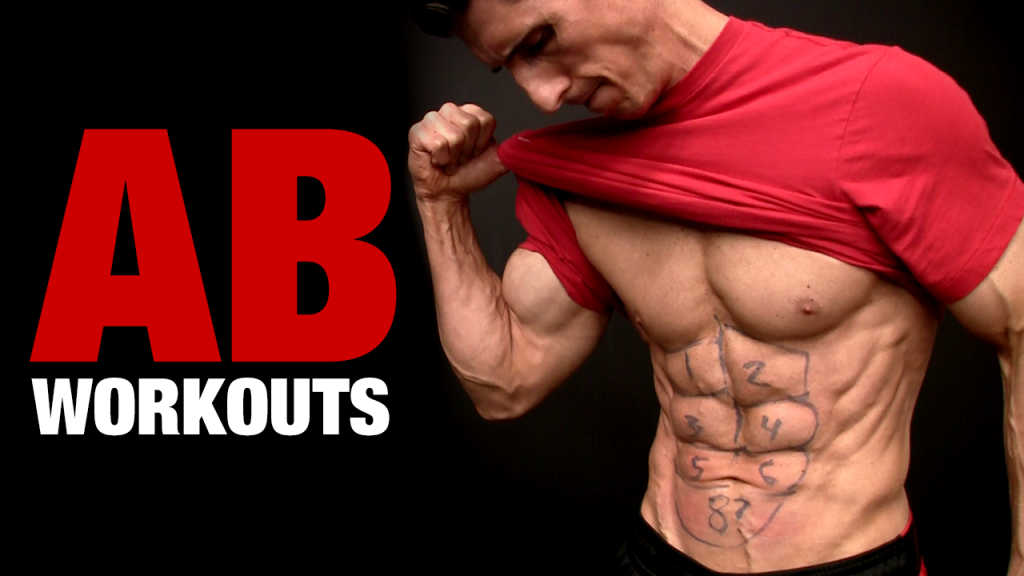
Workout Breakdown
-
Structure: Tri-set circuit (3 mini-circuits of 2 exercises each)
-
Rest: 30–45 seconds between exercises; 60 seconds between circuits
-
Rounds: 3 total sets per circuit
| Exercise | Targeted Region | Primary Benefit | Prescribed Reps / Duration |
| Dead Bug | Transverse Abdominis | Deep core stability & anti-extension | 12–15 reps per side |
| Hanging Leg Raise | Lower Rectus Abdominis | High-tension lower core flexion | 10–12 reps |
| Bicycle Crunch | Obliques & Upper Rectus | Rotational control & tension | 15–20 reps per side |
| RKC Plank | Full Core & Deep Stabilizers | Isometric strength & abdominal brace | 30–45 seconds hold |
| Russian Twist | Internal/External Obliques | Rotational endurance | 15 reps per side |
| Ab Wheel Rollout | Full Abdominal Wall | Advanced eccentric anti-extension | 8–12 reps |
Detailed Exercise Guides
1. The Dead Bug
-
Why it works: Excellent for teaching you how to brace your core without arching your lower back.
-
How to do it:
-
Lie on your back with arms extended straight up toward the ceiling and knees bent at 90 degrees.
-
Press your lower back completely flat against the floor (no space under your spine).
-
Slowly extend your right arm overhead while lowering your left leg toward the floor.
-
Pause right above the floor, then return to the starting position and switch sides.
-
2. Hanging Leg Raise
-
Why it works: One of the most effective movements for the lower abdominal region.
-
How to do it:
-
Hang from a pull-up bar with an overhand grip and shoulders engaged.
-
Avoid swinging or using momentum.
-
Curl your pelvis slightly upward as you lift your knees or straight legs toward your chest.
-
Squeeze at the top for one second, then lower your legs under control.
-
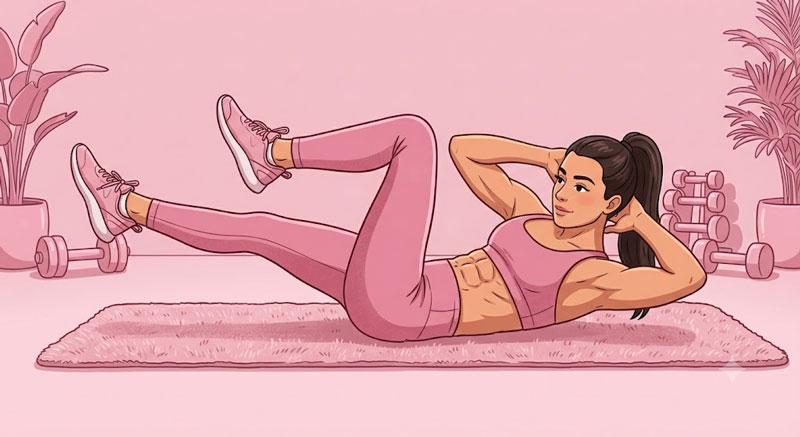
3. Bicycle Crunch
-
Why it works: EMG studies consistently place the bicycle crunch among the top exercises for activating both the rectus abdominis and obliques.
-
How to do it:
-
Lie flat on the floor with fingertips behind your head (do not pull on your neck).
-
Lift your shoulder blades off the floor and bring your right elbow toward your left knee while extending the right leg straight.
-
Alternate sides in a slow, controlled fluid motion—focusing on twisting from the torso, not just swinging your elbows.
-
The Truth About Visible Abs: Low Body Fat vs. Muscle Size
A common myth is that thousands of daily crunches will strip away belly fat. The reality is simple: you cannot spot-reduce fat.
  [ Core Workouts ]  ---> Builds muscle size & structural core stability
  [ Caloric Deficit ] ---> Lowers body fat percentage so abs become visible
While core workouts thicken and strengthen the abdominal muscles, those muscles remain hidden under a layer of body fat if your overall body fat percentage is too high.
Body Fat Guidelines for Visible Abs
-
Men: Typically visible around 10% to 12% body fat (and sharply defined under 10%).
-
Women: Typically visible around 16% to 19% body fat.
To reach these levels safely, combine your abs workout routine with a moderate caloric deficit (eating 300–500 calories below your daily total energy expenditure) and a high-protein diet (0.8–1.0g of protein per pound of body weight).

4 Common Abs Workout Mistakes to Avoid
-
Relying on Momentum: Swinging your body during leg raises or rushing through crunches transfers the load away from your abs and onto your hip flexors. Slow down every rep.
-
Arching the Lower Back: During planks, leg raises, or rollouts, letting your lower back sag strains the lumbar spine. Always tuck your pelvis slightly (posterior pelvic tilt) to keep the tension on your core.
-
Training Abs Every Single Day: Like any other muscle group, your abdominals need time to rest, repair, and grow. 3 to 4 targeted core sessions a week are far more effective than daily light volume.
-
Neglecting Progressive Overload: Doing 50 air crunches every day eventually stops triggering growth. Add resistance (cable woodchops, weighted planks, hanging leg raises with ankle weights) to continue building muscle density.
Frequently Asked Questions (FAQs)
How often should I train my abs?
Training abs 3 to 4 times per week is optimal for most lifters. This provides adequate stimulus for growth while allowing 24 to 48 hours for recovery between sessions.
Are crunches bad for your lower back?
Traditional crunches aren’t inherently dangerous for healthy individuals, but high volumes of spinal flexion combined with poor form can aggravate pre-existing lower back issues. Exercises like dead bugs, planks, and stir-the-pot offer safer, low-impact core activation.
Can I get six-pack abs without equipment?
Yes! Bodyweight exercises like planks, mountain climbers, bicycle crunches, and hollow body holds are highly effective for building core strength and endurance.
Final Thoughts
Building a strong, defined core requires a two-pronged approach: progressive core training to build the muscle, and smart nutrition to reveal it. Stick to compound movements, keep your reps slow and deliberate, and track your dietary intake to see visible, long-lasting results.