
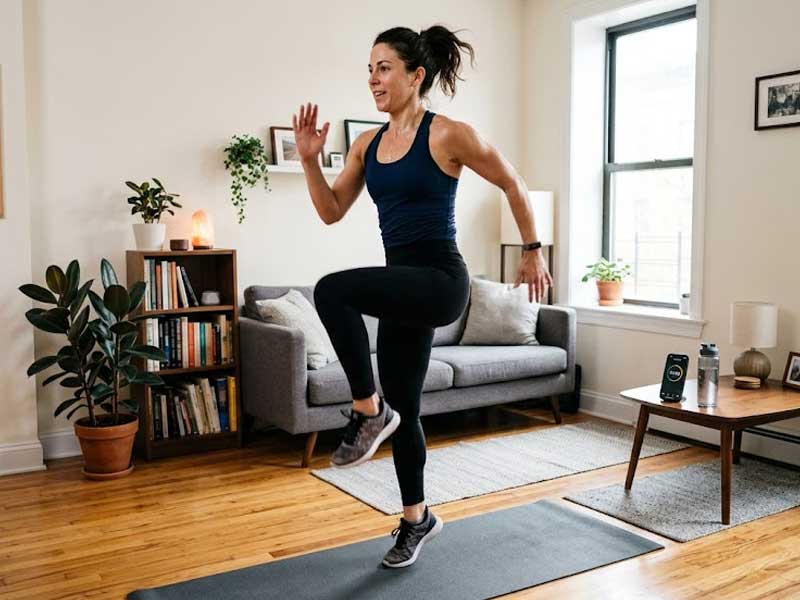
The Ultimate 20-Minute No-Equipment Home Workout for Busy People
Finding an hour to drive to the gym, change, work out, and drive back feels nearly impossible when juggling a career, family, and personal life. When time is tight, fitness is often the first routine we drop.
However, you do not need a gym membership or an hour of free time to stay in peak shape. Research consistently shows that high-intensity, short-duration workouts can be just as effective for fat loss, cardiovascular health, and muscle endurance as longer, moderate sessions.
This 20-minute no-equipment home workout is designed specifically for busy people. It requires zero gear, can be done in a space the size of a yoga mat, and targets every major muscle group to maximize your results in minimal time.
The Science: Why 20 Minutes Is All You Need
Many people assume a short workout isn’t worth the effort. In reality, brief, high-intensity bodyweight routines trigger the EPOC effect (Excess Post-Exercise Oxygen Consumption). Commonly known as the “afterburn,” EPOC ensures your body continues to burn calories at an accelerated rate for hours after your workout is finished.
By utilizing high-intensity intervals, you efficiently stress both your muscular and aerobic systems. This type of training improves:
-
Cardiovascular endurance: Elevating your heart rate quickly builds lung and heart stamina.
-
Functional strength: Bodyweight exercises force your core, stabilizing muscles, and joints to work together, protecting you from everyday injuries.
-
Metabolic health: Short, intense bursts of movement help regulate blood sugar levels and improve insulin sensitivity.
The 20-Minute “Anytime” Workout Blueprint
This workout utilizes an AMRAP (As Many Rounds As Possible) and time-interval hybrid structure. You will perform five exercises in a circuit.
The Structure:
-
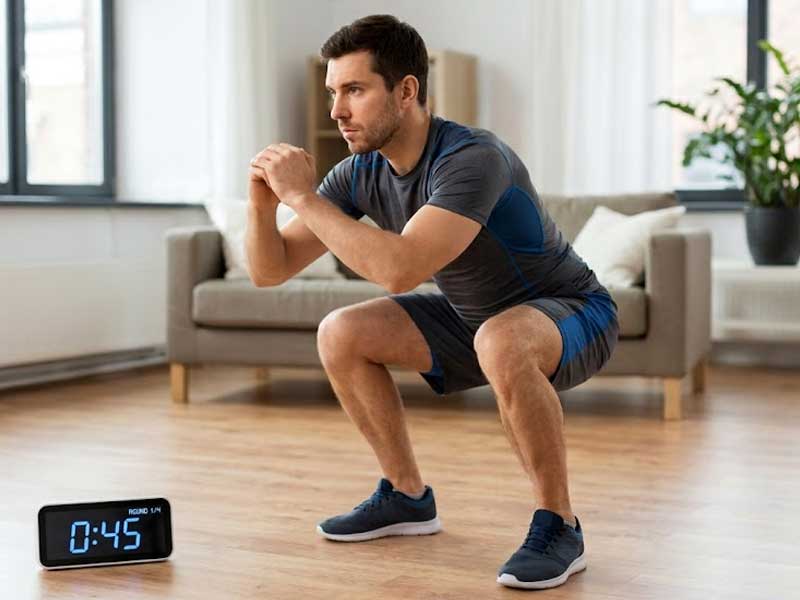
Work: 45 seconds per exercise
-
Rest: 15 seconds between exercises
-
Total Rounds: 4 rounds (5 exercises × 1 minute per station = 5 minutes per round)
Before beginning, spend 2 minutes doing light dynamic movements like arm circles, gentle torso twists, and march-in-place to warm up your joints.
3 Secrets to Maximize Your Home Workouts
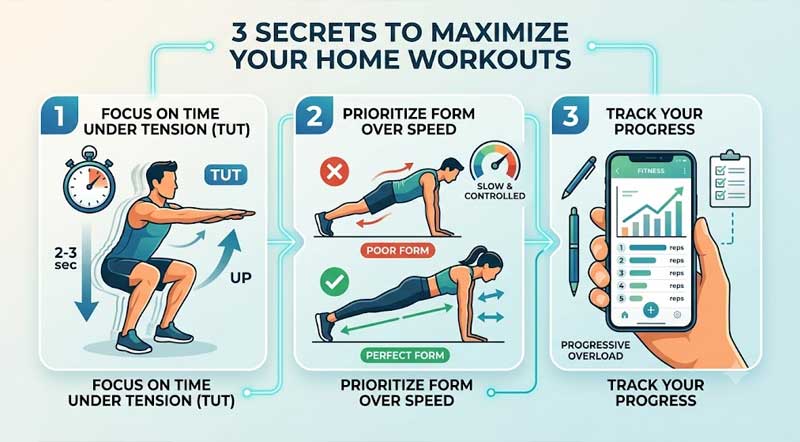
To get the absolute most out of a 20-minute window, focus on these three variables:
1. Focus on Time Under Tension (TUT)
Because you aren’t lifting external weights, you must make your body weight feel heavier. Slow down the lowering phase of your squats and push-ups (taking 2–3 seconds to go down), then explode upward. This increases muscle fiber recruitment without adding joint strain.
2. Prioritize Form Over Speed
Moving fast is great for cardio, but sloppy movement leads to injury. If your lower back arches during a plank or your knees hurt during lunges, slow down. Controlled, perfect form builds functional muscle much faster than rushing through poor reps.
3. Track Your Progress
Write down how many reps you complete during each 45-second interval. When you repeat this workout next week, try to beat your previous score by just one or two reps. This concept of progressive overload is the key to continuous fitness gains.
Frequently Asked Questions
Can I build muscle with just bodyweight exercises?
Yes. By using high-intensity intervals and minimizing rest periods, you create metabolic stress and mechanical tension in the muscles. This combination effectively stimulates muscle growth (hypertrophy) and definition.
How many times a week should I do this workout?
For busy individuals, consistency is everything. Aim to perform this circuit 3 to 4 times per week. Because it uses your own body weight, your recovery time is shorter than it would be after heavy lifting, allowing for frequent training sessions.
What should I eat after a quick home workout?
To optimize muscle recovery, consume a snack or meal containing both protein and clean carbohydrates within 1 to 2 hours post-workout. Excellent options include a scoop of protein powder mixed with a banana, or a simple chicken and rice bowl.
Stay Consistent, Anytime
The hardest part of any fitness routine is simply starting. By removing the barriers of travel time and expensive gear, this routine eliminates the most common excuses. Clear a small space in your living room, set a timer for 20 minutes, and commit to taking care of your health today.